
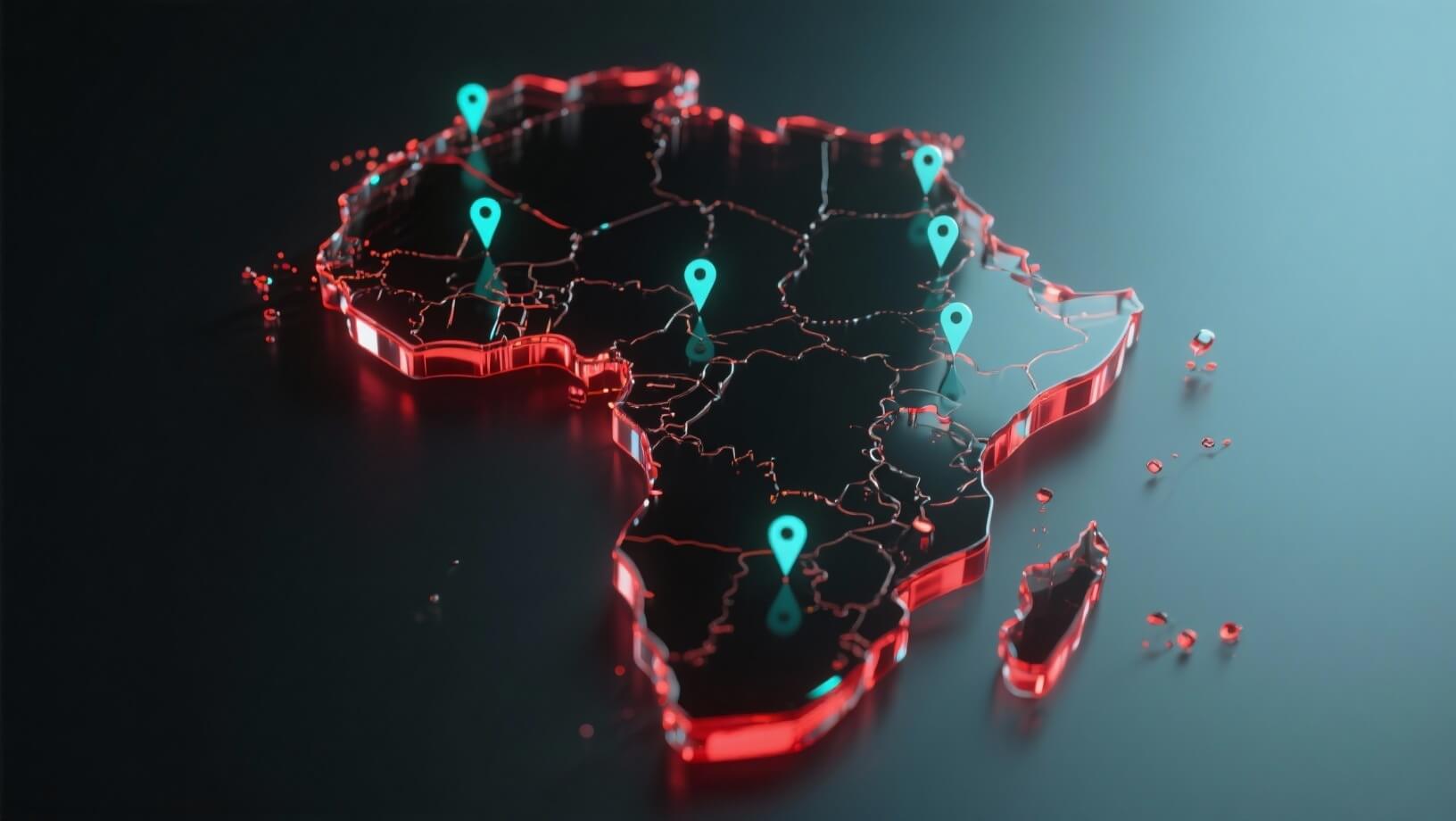
Africa’s Top 10 Largest Companies by Market Cap
The largest companies in Africa are primarily listed on the Johannesburg Stock Exchange and operate in mining, banking, telecommunications and technology. As of July 2026, AngloGold Ashanti is Africa’s largest publicly traded company by market capitalization, followed by Naspers and FirstRand.
| Rank | Company | Sector | Country | Market Cap | Key Beginner Fact |
|---|---|---|---|---|---|
| 1 | AngloGold Ashanti | Gold Mining | South Africa | $42.43B | One of the world’s largest gold producers. |
| 2 | Naspers | Tech/Media | South Africa | $37.64B | Early investor in Tencent; the “Tech King” of Africa. |
| 3 | FirstRand | Finance | South Africa | $34.17B | A leader in retail and investment banking. |
| 4 | Standard Bank Group | Banking | South Africa | $32.38B | Africa’s largest lender by assets. |
| 5 | Capitec Bank | Fintech/Bank | South Africa | $31.0B | The “disruptor” known for low-cost digital banking. |
| 6 | Gold Fields | Gold Mining | South Africa | $30.91B | Operates mines across 3 continents; a “Safe Haven” stock. |
| 7 | MTN Group | Telecom | South Africa | $25.58B | The primary mobile network across 20+ countries. |
| 8 | Vodacom Group | Telecom | South Africa | $18.16B | Part of the Vodafone family; a leader in mobile money. |
| 9 | Attijariwafa Bank | Banking | Morocco | $14.4B | The leading bank in the Maghreb region. |
| 10 | Impala Platinum | Platinum Mining | South Africa | $10.09B | One of the world’s largest platinum producers; key to the green energy transition. |
Source: companiesmarketcap.com, as of July 2026. Market caps fluctuate daily.
1. AngloGold Ashanti — Market Cap: $42.43B
Overview: AngloGold Ashanti is a global gold mining company with operations spanning Africa, the Americas, and Australia, focused on the exploration, development, and production of gold.
Why it is valuable: Gold serves as a global store of value and hedge against inflation. AngloGold’s scale, diversified geographic footprint, and disciplined cost management make it a preferred exposure to precious metals.
Key business segments:
- Gold production (open-pit and underground mining)
- Exploration and resource development
- Sustainable mining initiatives and community partnerships
Growth drivers:
- Elevated gold prices supporting margin expansion and free cash flow
- Portfolio optimisation focusing on high-margin, long-life assets
- Adoption of automation and digital technologies to improve safety and efficiency
Analytics Note: Analysts expect production volumes to remain stable in the coming quarter, with all-in sustaining costs benefiting from operational leverage and favourable gold price assumptions.
2. Naspers — Market Cap: $37.64B
Overview: Naspers is a global technology investor and media group, best known for its early stake in Tencent and its ownership of Prosus, which holds assets across e-commerce, food delivery, and classifieds.
Why it is valuable: Naspers provides indirect exposure to high-growth internet markets in Asia, Europe, and Latin America, making it a unique “tech gateway” for investors seeking African-listed exposure to global digital trends.
Key business segments:
- Prosus (international internet assets: e-commerce, food delivery, classifieds)
- Media (pay-TV, online classifieds, food delivery in Africa)
- Venture investments in early-stage tech companies
Growth drivers:
- Value realisation from Prosus share buybacks and strategic asset monetisation
- Growth in African digital services (e-commerce, payments, content)
- Continued focus on reducing the holding company discount through capital allocation
Analytics Note: Market watchers expect continued progress on capital allocation initiatives, with potential upside from further Prosus share repurchases and improved sentiment toward global tech valuations.
3. FirstRand — Market Cap: $34.17B

Overview: FirstRand is a leading financial services group, operating through subsidiaries including FNB (retail banking), RMB (investment banking), and Ashburton Investments.
Why it is valuable: FirstRand’s decentralised operating model and strong risk culture have consistently delivered above-peer returns on equity, making it a favourite among institutional investors seeking quality African financial exposure.
Key business segments:
- FNB (retail and commercial banking)
- RMB (corporate and investment banking)
- Ashburton Investments (asset management)
Growth drivers:
- Digital innovation in retail banking driving client acquisition
- Expansion of investment banking services across Africa
- Fee income growth from wealth management and insurance products
Analytics Note: Near-term earnings are expected to benefit from stable net interest margins and controlled credit impairment charges, with fee income providing additional upside.
4. Standard Bank Group — Market Cap: $32.38B

Overview: Standard Bank is Africa’s largest lender by assets, offering corporate, investment, and retail banking services across more than 20 African countries.
Why it is valuable: The bank’s pan-African footprint provides diversified exposure to the continent’s economic growth, while its strong capital position and risk management framework support resilience through economic cycles.
Key business segments:
- Corporate and Investment Banking
- Personal and Business Banking
- Wealth and Insurance services
Growth drivers:
- Expansion of digital banking platforms across African markets
- Growth in transactional banking and trade finance supporting regional commerce
- Strategic partnerships to deepen financial inclusion and client engagement
Analytics Note: Loan book growth is projected to remain modest but steady, with credit quality metrics expected to hold within guidance ranges and net interest margins supported by the prevailing rate environment.
5. Capitec Bank — Market Cap: $31.0B
Overview: Capitec is a disruptive retail bank known for its simple, low-cost, digital-first banking model targeting mass-market consumers across South Africa.
Why it is valuable: Capitec’s technology-led approach has enabled rapid client acquisition and high operational efficiency, setting a new standard for banking in emerging markets and driving sustainable growth.
Key business segments:
- Retail banking (savings, transactions, credit)
- Digital platforms and mobile banking
- Insurance and ancillary financial services
Growth drivers:
- Continued client base expansion in South Africa and select African markets
- Cross-selling of credit and insurance products to existing clients
- Technology investments driving lower cost-to-serve and improved client experience
Analytics Note: Client growth and loan book expansion are expected to remain key performance drivers in the coming quarter, with digital engagement metrics supporting margin resilience.
6. Gold Fields — Market Cap: $30.91B

Overview: Gold Fields operates gold mines across South Africa, West Africa, Australia, and South America, with a focus on sustainable, low-cost production and long-life assets.
Why it is valuable: As a “safe haven” asset, gold often appreciates during periods of market stress. Gold Fields’ geographic diversification and disciplined hedging strategy provide stability in volatile environments.
Key business segments:
- Gold mining and processing
- Exploration and resource expansion
- Environmental, social, and governance (ESG) initiatives
Growth drivers:
- Expansion projects in West Africa increasing production capacity
- Cost discipline and operational improvements supporting margins
- Strong demand for gold as a portfolio diversifier amid macro uncertainty
Analytics Note: Production guidance for the next quarter is expected to remain in line with prior forecasts, with all-in sustaining costs benefiting from operational leverage and favourable input cost trends.
7. MTN Group — Market Cap: $21.8B
Overview: MTN is Africa’s largest mobile network operator, providing voice, data, and digital services across more than 20 countries in Africa and the Middle East.
Why it is valuable: Mobile connectivity is foundational to economic development in Africa. MTN’s scale, infrastructure investments, and fintech expansion position it to capture the continent’s data consumption and digital payments boom.
Key business segments:
- Mobile voice and data services
- Mobile money and fintech (MoMo platform)
- Enterprise and wholesale solutions
Growth drivers:
- Rapid growth in mobile money transactions and active users across key markets
- 4G/5G network expansion driving data ARPU growth and customer retention
- Strategic focus on high-growth markets in West and Central Africa
Analytics Note: Mobile money revenue is expected to continue outpacing traditional voice revenue, supporting margin expansion and offsetting legacy service declines.
8. Vodacom Group — Market Cap: $18.4B

Overview: Vodacom, majority-owned by Vodafone Group, is a leading communications provider in Africa, offering mobile, fixed-line, and digital financial services to over 200 million customers.
Why it is valuable: Vodacom’s partnership with Vodafone provides access to global technology and best practices, while its deep African footprint offers exposure to high-growth markets and digital transformation trends.
Key business segments:
- Mobile services (voice, data, IoT)
- M-Pesa mobile money platform
- Business solutions and cloud services
Growth drivers:
- M-Pesa user growth and transaction volume expansion across East and Southern Africa
- Enterprise digital transformation demand supporting B2B revenue growth
- Network infrastructure investments supporting data growth and 5G readiness
Analytics Note: M-Pesa contribution to group revenue is expected to rise further, reinforcing the strategic shift toward digital financial services and supporting margin expansion.
9. Attijariwafa Bank — Market Cap: $14.9B
Overview: Attijariwafa Bank is the largest financial institution in the Maghreb region, with a strong presence in Morocco, West Africa, and Europe, offering retail, corporate, and investment banking services.
Why it is valuable: The bank’s regional diversification and focus on corporate and retail banking provide stability and growth exposure to North and West African economies, with strong governance and capital metrics.
Key business segments:
- Retail and commercial banking
- Investment banking and asset management
- International operations across Africa and Europe
Growth drivers:
- Expansion of digital banking services across African subsidiaries
- Growth in trade finance supporting regional commerce and intra-African trade
- Strategic acquisitions to deepen market presence in high-growth Francophone Africa
Analytics Note: Loan growth in core Moroccan operations is expected to remain steady, supported by a stable macroeconomic environment and continued public investment.
10. Impala Platinum — Market Cap: $10.09B

Overview: Impala Platinum (Implats) is one of the world’s largest producers of platinum group metals (PGMs), with operations in South Africa and Zimbabwe.
Why it is valuable: Platinum group metals are essential for catalytic converters, fuel cells, and industrial applications – placing Implats at the intersection of traditional industry and the green energy transition.
PGM demand is underpinned by the global shift to hydrogen economies and stricter vehicle emissions standards.
Key business segments:
- Platinum, palladium, and rhodium mining and refining
- Processing and beneficiation
- By-product metals (nickel, copper, cobalt)
Growth drivers:
- Green energy tailwinds – hydrogen fuel cells rely on platinum group metals
- Recovery in PGM prices supporting revenue and margin expansion
- Cost reduction programmes and operational efficiency improvements
Analytics Note: PGM market dynamics are closely watched; palladium and rhodium pricing volatility may impact near-term earnings, while longer-term platinum demand from the hydrogen economy provides a structural growth driver.
The Sleeping Giant is Awake
Africa is no longer just a story of raw materials and extraction. The continent is undergoing a profound transformation, from a resource-dependent economy to an emerging hub for technology, financial services, and digital innovation. While global investors often look West to Wall Street or East to Asian markets, the “Southern Giants” of Africa offer unique opportunities in commodities and digital transformation.
In this updated guide, we break down Africa’s top 10 largest companies by market capitalisation, explain what’s moving the needle, and give beginner traders the knowledge they need to understand this dynamic market.
What Are the Main Drivers?
Three powerful forces are shaping Africa’s corporate landscape:
- Commodity Cycles: Elevated gold and platinum prices have lifted miners, making them key beneficiaries of global macro uncertainty.
- Digital Leapfrogging: With limited legacy infrastructure, Africa has adopted mobile-first solutions faster than many developed markets.
- Financial Inclusion: Banks and payment platforms are bringing millions of unbanked consumers into the formal economy, driving sustainable growth.
Deep-Dive Subtopics for Beginners
A. Understanding the “Big Three” Sectors
Commodities (Gold & Platinum): Why gold miners like AngloGold and platinum producers like Impala Platinum are often used as a hedge against inflation. When confidence in fiat currencies wanes or inflation rises, gold and PGMs tend to appreciate. Mining stocks offer leveraged exposure to metal price movements, making them attractive during periods of economic uncertainty.
Banking & Fintech: How African banks are leading the world in “mobile-first” banking. With low branch penetration but high mobile phone adoption, African institutions like Capitec and MTN’s MoMo platform have pioneered banking solutions designed for smartphones first. This leapfrog approach has brought financial services to millions previously excluded from the formal economy.
Telecommunications: Why data and mobile minutes are considered the “new oil” in Africa. In Africa, mobile connectivity is not a luxury – it is essential infrastructure. Telecom companies like MTN and Vodacom are platforms for payments, commerce, education, and healthcare. As data consumption grows, so does their strategic value and revenue potential.
B. Trader’s Toolkit: Key Concepts
Market Cap Simplified — The Lego Analogy: Think of market capitalisation like building with Legos. The share price is the cost of one Lego brick. Market cap is the total cost to buy every brick needed to build the entire castle. A company with a $10 share price but 1 billion shares outstanding ($10B market cap) is “larger” than a company with a $100 share price but only 10 million shares ($1B market cap). Total value matters more than per-share price.
Dual Listings — Two Markets, One Company: Many African giants – like AngloGold Ashanti and Naspers – are listed on both the Johannesburg Stock Exchange (JSE) and major international exchanges like the NYSE. This dual listing improves liquidity, broadens the investor base, and can reduce the impact of local currency volatility on trading.
Currency Fluctuations — The Rand Factor: Most African companies report earnings in local currencies like the South African Rand (ZAR). If the Rand weakens against the US dollar, the dollar-denominated value of those earnings falls – even if the company performed well locally. For foreign investors, currency moves can amplify or offset stock performance. Always consider both the stock and the currency.
C. Strategic Advice for New Traders
- Start with Blue Chips: The Top 10 companies on this list are generally more stable (“less volatile”) than smaller, speculative names. For beginners, starting with these established giants can provide exposure to African growth while managing downside risk. Focus on companies with strong balance sheets, consistent dividends, and clear competitive advantages.
- Look for Dividends: Many African blue chips – particularly in mining and banking – have strong track records of paying dividends. Companies like AngloGold, Standard Bank, and MTN often return a portion of profits to shareholders, providing income alongside potential capital appreciation. Dividend-paying stocks can help smooth portfolio volatility while you learn.
- The Power of ADRs: American Depositary Receipts (ADRs) allow traders in the US or Europe to buy shares of African companies without opening a local brokerage account. ADRs trade on major exchanges like the NYSE in US dollars, simplifying access and reducing currency conversion friction. ADRs are often the easiest entry point to African equities.
How to Invest in African Stocks
For international traders, there are several pathways to gain exposure:
- ETFs: Exchange-traded funds like the iShares MSCI South Africa ETF (EZA) or VanEck Africa Index ETF provide diversified, low-cost exposure to a basket of African equities. Ideal for beginners seeking broad exposure without stock-picking risk.
- ADRs: ADRs let you trade select African companies directly on US exchanges in USD. Check your broker’s availability for names like AngloGold Ashanti (AU) or Gold Fields (GFI).
- International Brokers: Platforms like Hantec Markets offer access to a wide range of African and global markets, providing competitive pricing and professional-grade tools. Suitable for traders of all experience levels looking for a regulated broker with a strong track record.
- CFDs: Contract-for-difference products allow speculative exposure to African stocks without owning the underlying shares. Hantec Markets offers CFDs on a range of African-linked instruments, giving traders flexible access to the region’s growth story – though CFDs carry higher risk and leverage and are not suitable for all investors. Use with caution and strict risk controls.
- Direct Exchange Access: Sophisticated investors can open accounts with local brokers to trade directly on the JSE, Casablanca Stock Exchange, or Nigerian Exchange – but this involves additional complexity, currency risk, and regulatory considerations.
Risks for Foreign Investors
- Currency volatility can erode returns even if the stock performs well locally
- Lower trading liquidity may impact entry/exit timing and increase transaction costs
- Political or regulatory changes can affect specific sectors or companies unexpectedly
- Repatriation of capital may face restrictions in some jurisdictions
- Time zone differences can complicate active trading for non-African residents
Always conduct thorough due diligence and consider consulting a financial advisor before investing in emerging markets.
Why African Stock Markets Are Smaller
Several structural factors contribute to the relatively modest size of African equity markets compared to global peers:
- Currency weakness: Persistent depreciation of local currencies against reserves (USD, EUR) can deter foreign capital and reduce the dollar-denominated value of listed companies.
- Lower liquidity: Many African exchanges have lower daily trading volumes, which can increase transaction costs and limit the ability to enter or exit large positions quickly.
- Limited IPO activity: Fewer companies list publicly due to regulatory complexity, family ownership structures, or preference for private capital – reducing market depth.
- Political risk: Policy uncertainty, elections, or geopolitical tensions can create volatility and discourage long-term institutional investment.
- Capital flight: During periods of stress, capital can quickly move offshore, putting pressure on local markets and currencies.
- Infrastructure constraints: Limited digital infrastructure, settlement systems, or market data availability can create operational friction for international participants.
Despite these challenges, Africa’s markets offer compelling long-term opportunities for patient, informed investors who understand the local context.
Sector Analysis: Where Is Capital Flowing?
| Sector | Companies | Key Driver | Risk |
|---|---|---|---|
| Mining & Commodities | AngloGold Ashanti, Gold Fields, Impala Platinum | Record gold prices; safe-haven demand; platinum demand from green energy | Commodity price volatility; operational challenges in deep-level mining |
| Technology & Media | Naspers | Global internet exposure via Prosus; African digital services growth | Holding company discount; regulatory pressure on tech platforms |
| Banking & Finance | FirstRand, Capitec Bank, Standard Bank Group, Attijariwafa Bank | Financial inclusion, digital banking adoption, rising middle class | Credit cycle sensitivity; currency volatility affecting cross-border ops |
| Telecommunications | MTN Group, Vodacom Group | Data growth, mobile money expansion, 4G/5G rollout | Regulatory pricing pressure; infrastructure investment requirements |
Regional Distribution
- South Africa: 9 of top 10 (reflecting the JSE’s depth and liquidity)
- Morocco: 1 of top 10 – Attijariwafa Bank (showcasing North African market strength)
- Pan-African operations: Most top companies operate across multiple African jurisdictions
If you liked this post, you might also want to check out our posts on the Top Ten non‑US companies, the largest US companies, and the biggest UK‑based companies. Additionally, we invite you to explore our latest blog post that delves into the fascinating realm of trillion‑dollar companies
If you are interested in more, check out our articles:
Disclaimer: The content of this article is intended for informational purposes only and should not be considered professional advice.