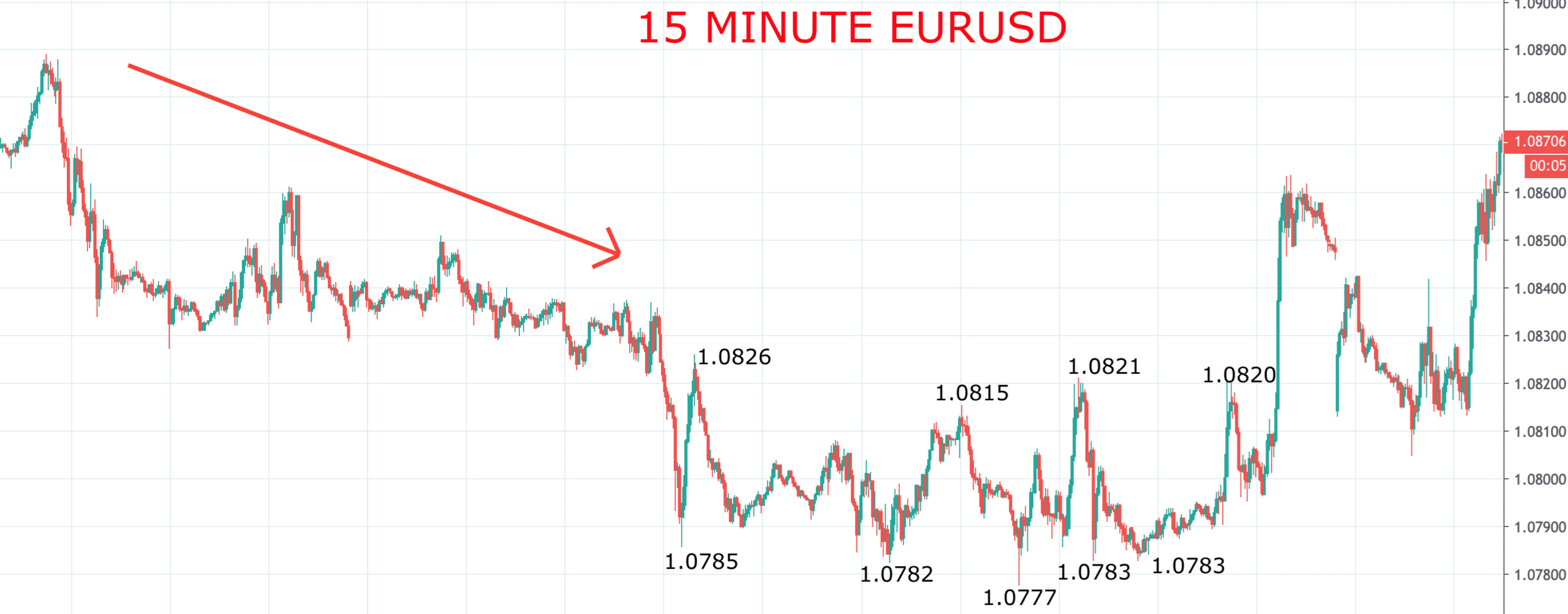
Markets do not move in one direction all the time and then change direction and start to trend in the opposite direction. For some the time, in fact, it could be argued the majority of the time, markets enter consolidation phases when they go into ranges and move sideways. Although it is possible to profit from trading the range, there is also an opportunity that comes from identifying when a market may breakout from a range.
In this article, we will explore breakout trading and look at:
Breakout trading is all about identifying when markets enter sideways, consolidation ranges and taking advantage of any breakouts that lead towards new trends. It's an opportunity to profit by predicting the breakout that will lead to the start of a new trend in the direction of the breakout.
Alongside identifying the support and resistance areas to define when a breakout occurs, it would also be useful to use a technical momentum indicator to assist in the timing of the breakout entry. You can learn more about types of indicators at our Leaning Hub in the section for Intermediate Treaders.
Here we're going to look at an example of a breakout, looking initially at an unsuccessful or fake breakout (traders call this a fakeout), then a successful breakout.
The pros and cons of breakout trading are as follows:
There are significant advantages to breakout trading.
We've looked at the importance of breakout trading and how it works, plus the pros and cons of using this trading strategy. Learning to trade breakouts is an invaluable skill, and whether you are a beginner or an advanced technical trader, it is a skill you should look to master.
Timing a breakout is both art and science — and AI makes it easier to master both. In this guide, we show how to use AI prompts to detect breakout signals and manage trades more efficiently.
Top 5 Blogs